This week, as a department we did a bit of a “book look” and this opened up a discussion about presentation and layout of books within Maths. Whilst we’re all adhering to the school marking policies and doing all that we should – it was obvious that there are some variations in terms of presentation across the department and not just across different groups or sub-groups of students but because we don’t have a “modus operandii” for all teachers it’s really difficult to see if there are any trends within sub groups of “less than acceptable” bookwork. What we all agreed on is that there are some amazingly detailed books with immaculate working out … basically everything you’d want to see but we all to have different ways of working. For example Seager uses the back of his books for all his starters and never sticks sheets in the books whereas I stick everything in (I hate loose sheets!); One of our teams books, all have margins in, but I’ve never insisted on them … and up until a couple of years ago, was of the “I couldn’t give a monkey what colour you write in … as you long as you write something” school of thought. However as my confidence as a teacher grew I felt that it was OK to insist on certain ways of doing things – but it took me a while.
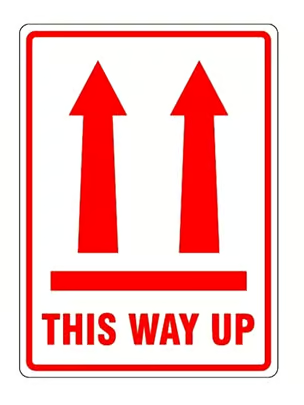 As a school some other subjects have adopted the “best-book & practice-book” philosophy but in maths we’ve gone down the “our maths books are our “best” books” route with any rough work (you know, working out or quick ten questions etc) scribbled in the back of the books. What we discovered was that it is easy to assume when flicking through an almost-full book that the “scruffy stuff” at the back is part of the students normal maths work and in lots of cases, it isn’t and this is how we came up with the idea of still using the back of the book for “rough stuff” but getting the students to turn the book upside down – which is why today, me and Will nearly come to blows over some “This Way up” stickers (he got his way!! but I let him win the argument … honest!) which we’re going to stick on the back of our exercise books so that it is obvious when the two types of work meet in a student’s book.
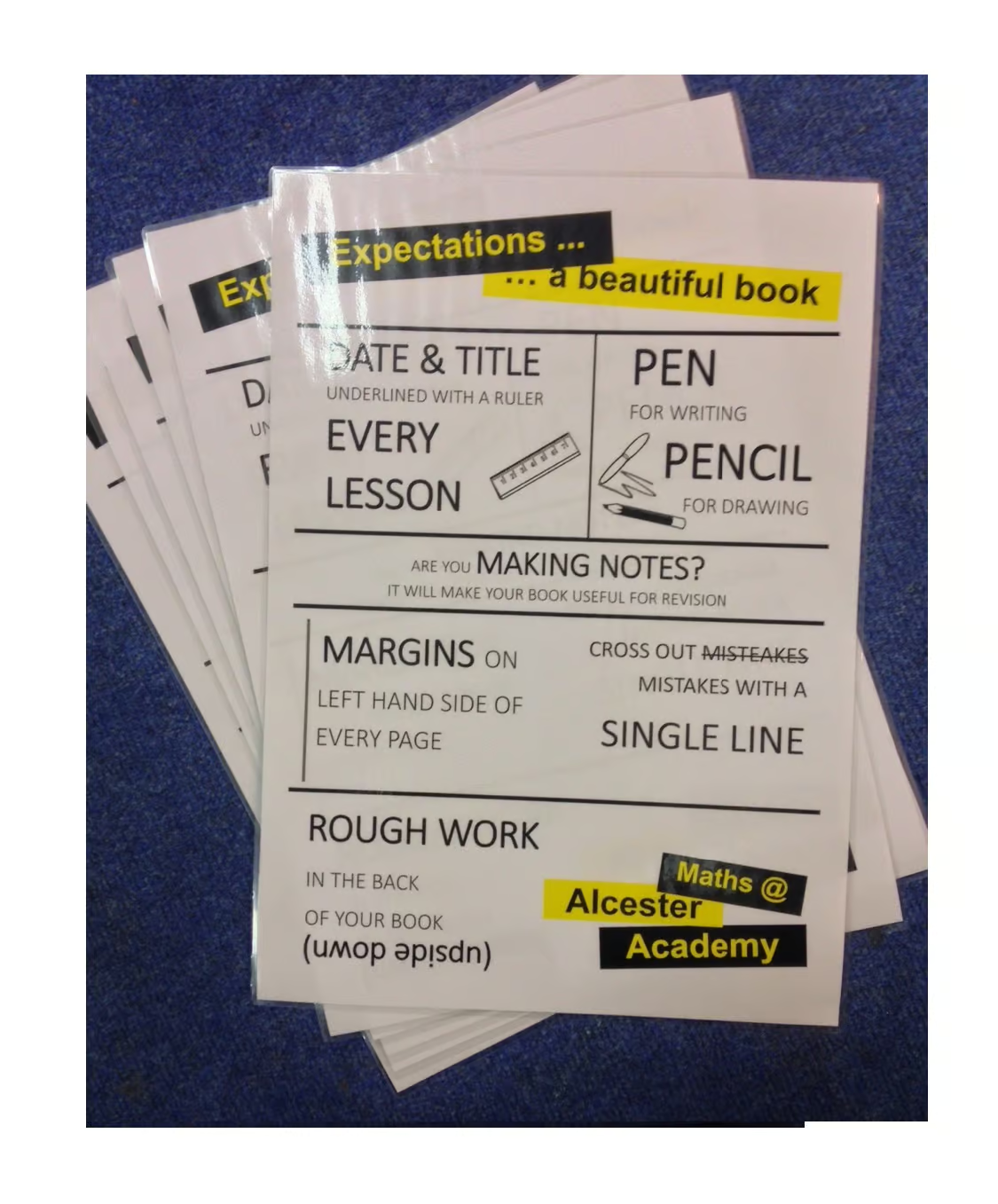
Our “book-look” also showed that in most cases any obvious shortfalls in presentation had been picked up on when the books were marked but it was a tough exercise because, what I may have thought was acceptable, another teacher may not so we came to the conclusion that we needed to come up with a set of standard things that we want in our books across the department – it sounds minor but things like a margin make a massive difference! So we agreed what our “non-negotiables” should be and last night I started putting together something … the idea is that as a department we’ll focus on a different “expectation” every term with the books being phase 1. We put the finishing touches to this today and I’m pleased with the finished product ( I particularly like the “upside down” bit) .
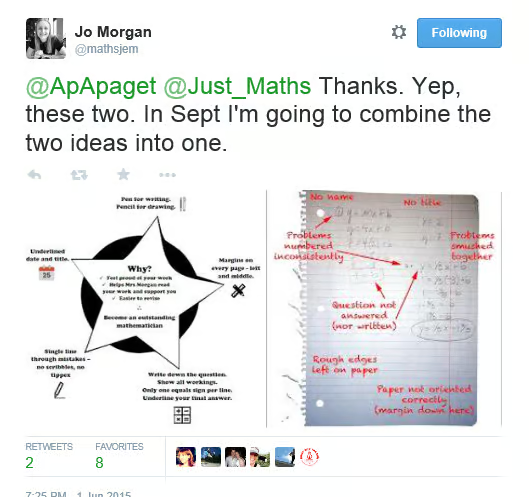
Last night, whilst I was playing at putting this together I wondered if I was reinventing the wheel so put a tweet out for ideas … you just gotta love twitter. There are some great ideas out there:
- Jo Morgan @Mathsjem wrote about her homework expectations in her POST HERE
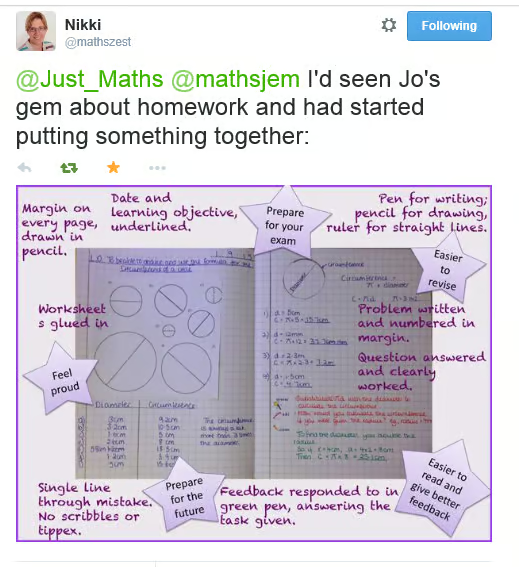
- Nikki @Mathszest has written about this too in her LATEST POST HERE
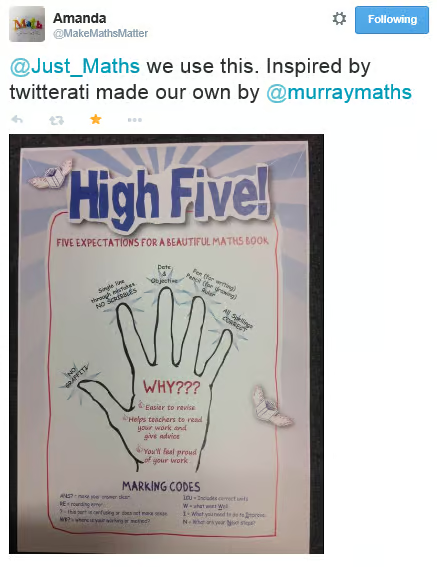
- Amanda (@MakeMathsMatter) also shared this one made by @murraymaths – I particularly liked the idea of a “beautiful maths book”

At KS4 our pupils have 2 books. One is a notebook and one is their workbook. All the notes they take during a lesson are written in the notebook with the idea being that by the end of year 11 they have their own personal revision guide. They compile an index as they go so they can find things easily and when we revise topics they can look back at their notes and annotate them or add to them if needed. How they lay things out is up to them but there is lots of colour, boxes, arrows and highlighting. They then have a separate book to do their work in which we collect in and mark. In that book we focus on the presentation etc that you have commented on (as well as their actual work obviously!).
We have been going round this topic for years in our department. We use most of the ideas above. We now have separate assessment books where we add in comments on the recently completed topic. We make comments on areas for development or extension and what a student has done well. This avoids teacher comments going astray as maths books are completed and disappear into the ether. It is a great resource at parents evening when you are asked the inevitable question – ‘what does my child need to improve’ as well as writing reports. We keep these at school to avoid them getting ‘lost’.
However, we insist on a working out, no matter how rough, be completed at the front of the book to support the answer. It becomes very easy to spot errors when correcting work .Showing all calculations to support an answer is an important skill for exams and we have decided that this should be habit. It also avoids transcription errors when copying work from one part of their book to another. Transcription errors are always identified as common errors in examiner reports.
I’ll also throw this idea into the mix that we have found to be very effective and use departmental wide. Students generally self assess their work. A correct answer gains a green tick. An incorrect answer, but where a student has been able to identify the error gains a green cross with the correction completed in green.
A red cross made by a student next to their work indicates they do not understand where they made an error. Students are encouraged to seek advice when this happens although some do not. However, this is what I look for when walking around the room. It is very easy to spot and identify those students who require additional support. A previous HoD saw this on a visit to another school and we shamelessly copied it.
I love the comment above about the separate notebook . that takes me back to my time at school, we did this. I still have mine, nearly 30 years later complete with banded copied notes from the teacher.